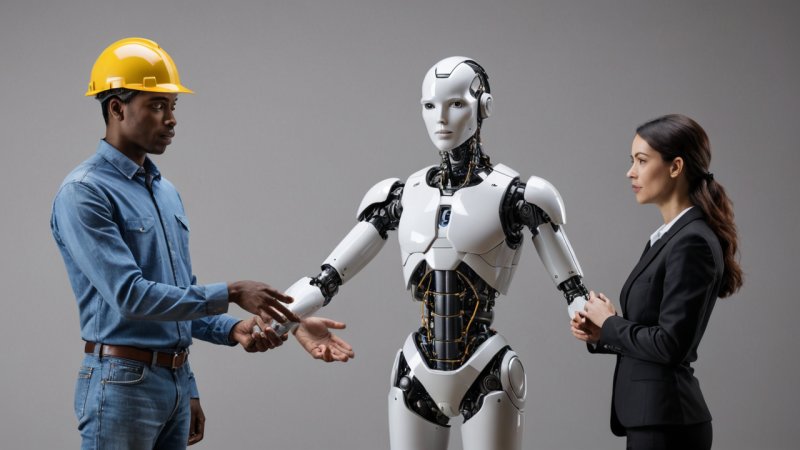
The integration of artificial intelligence (AI) into various sectors has sparked revolutionary changes, yet it also raises significant ethical questions, particularly regarding labor rights. As businesses increasingly adopt AI technologies for efficiency and productivity, the implications for workers and labor rights become a crucial area of discussion.
One of the primary concerns surrounding AI and labor rights is job displacement. Automation is poised to replace numerous roles across industries, leading to significant job losses. For instance, AI-driven systems in manufacturing can perform tasks faster and more accurately than human workers, resulting in increased productivity but also raising the specter of unemployment for many. This shift necessitates a conversation about the responsibilities of companies to their employees and society at large.
Moreover, the potential for AI to exacerbate existing inequalities cannot be overlooked. AI systems often rely on historical data, which may contain biases that can lead to discriminatory outcomes. For instance, if an AI is trained on data that reflects past hiring practices, it may perpetuate gender or racial biases in recruitment processes. Thus, ensuring that AI systems are developed and implemented ethically is vital to protect labor rights and promote fairness in the workplace.
Another ethical consideration is the transparency of AI algorithms. Many AI systems operate as 'black boxes,' making it challenging to understand how decisions are made. This lack of transparency can undermine workers' ability to appeal decisions made by AI, such as those related to hiring, performance evaluations, or layoffs. Companies must strive for greater transparency in their use of AI, providing clear explanations of how these systems function and the criteria they use.
Furthermore, the use of AI in surveillance and monitoring raises privacy concerns. Many organizations implement AI-driven tools to track employee productivity, often without their consent. This raises ethical questions about the extent to which employers can monitor their employees' activities and the potential for such surveillance to create a culture of mistrust.
To address these challenges, organizations must adopt ethical frameworks that prioritize labor rights in the deployment of AI technologies. This might include establishing guidelines for fair treatment of workers, ensuring transparency in AI processes, and providing retraining opportunities for employees displaced by automation. Engaging with stakeholders, including labor unions and advocacy groups, is also essential in developing practices that respect and protect labor rights.
In conclusion, while AI holds tremendous potential for enhancing productivity and innovation, it is crucial to consider its ethical implications on labor rights. As AI continues to evolve, a balanced approach that safeguards worker interests is necessary to ensure that technological advancements benefit all members of society. By proactively addressing these ethical concerns, businesses can foster a more equitable and just workplace.